your way.
Search 25 islands by vibe, season, language, or sustainability.
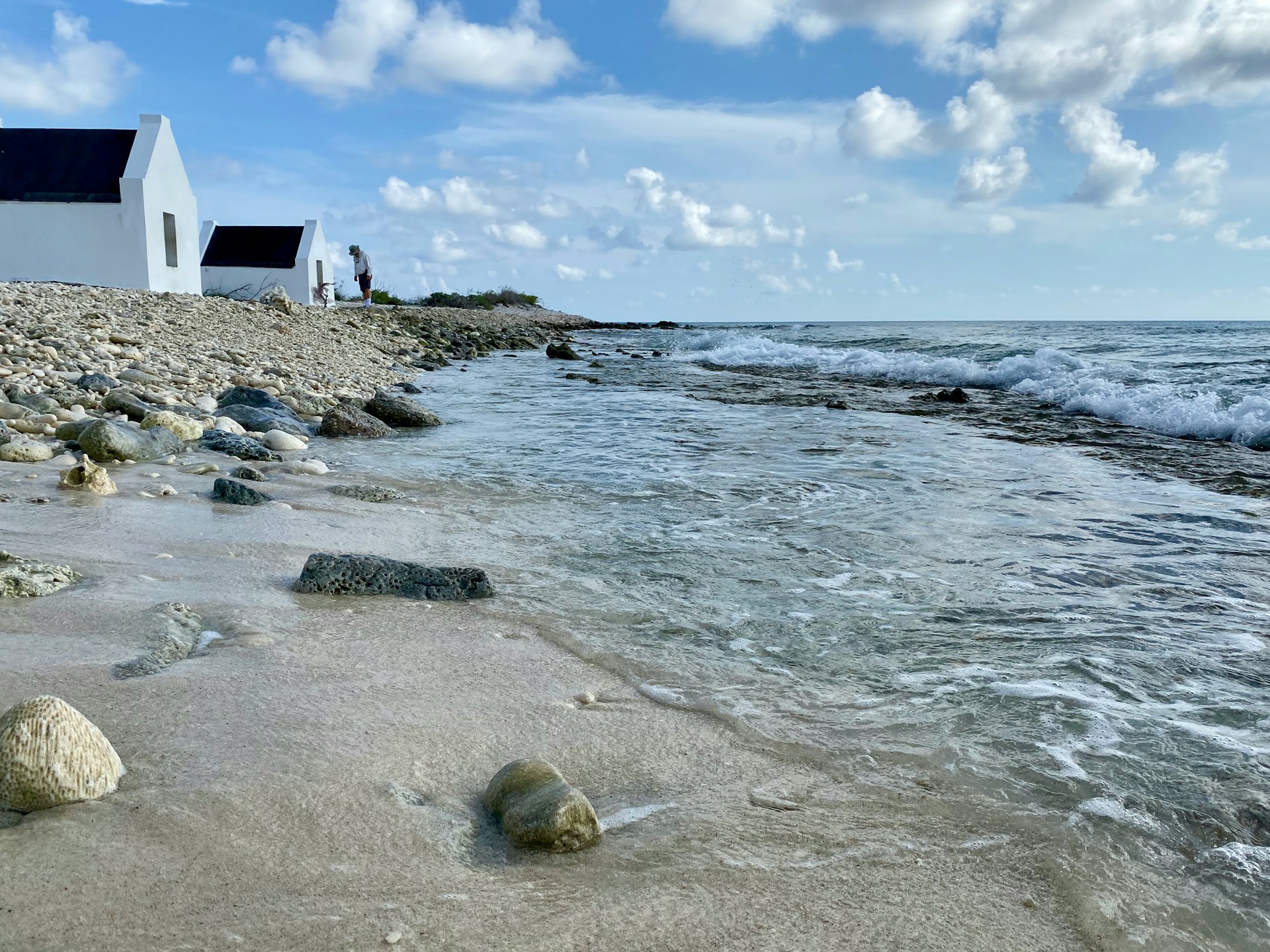
Bonaire Travel Guide 2026: Cost, Best Time to Visit & Tips
The diver's paradise — shore-entry reef, pink flamingos, and zero cruise ship crowds.
Bonaire is the quietest and most environmentally protected of the ABC Islands. The entire coastline from the high-water mark down to 200 feet is the Bonaire National Marine Park (designated 1979 — one of the first marine reserves in the world). Eighty-plus dive sites are marked with yellow stones along the coastal road and accessible by shore entry, which is why Bonaire is one of the world's top shore-diving destinations.
The island has no nightlife scene to speak of, no big resort strip, and a small permanent population of around 22,000. It is a working flamingo, salt, and dive economy. Most visitors are divers from the US, Netherlands, and Germany. Bonaire became a "special municipality" of the Netherlands in 2010 and uses the US dollar as official currency.
Quick answer
7-day mid-range cost
$1,800
USD · ~$257/day
Best months
Year-round
Daily cost breakdown
| Tier | Accommodation | Food | Transport | Activities |
|---|---|---|---|---|
| Budget | $50–90 | $25–45 | $15–30 | $30–60 |
| Mid-range | $150–250 | $50–85 | $30–55 | $60–120 |
| Luxury | $350–700 | $100–180 | $60–100 | $100–250 |
All prices in USD. Per person, per day, unless noted.
Best time to visit
Year-round
Outside the hurricane belt. Cooler, slightly drier months are December–April; dive visibility is consistently 80–100 feet year-round. Rainfall concentrates lightly in October–November.
Getting there
Main airport
BON — Flamingo International
Typical direct flights from
What Bonaire is known for
Shore diving (80+ marked sites accessible from the coastal road), flamingos (the salt pans host one of the largest populations in the western hemisphere), Washington-Slagbaai National Park, salt production, windsurfing at Lac Bay, and a uniquely conservation-first tourism model. The "nature fee" required of every visitor funds the marine park.
Getting around
A rental pickup truck ($45–70/day) is the standard — divers need open beds for dive tanks. Driving is on the right, and traffic is minimal outside Kralendijk. The island is small at 113 square miles. Bicycles work for short trips around town.
Related guides
Frequently asked questions
Is Bonaire expensive?+
Moderate, but dive costs are unavoidable. Hotel and food prices are cheaper than Aruba and roughly equal to Curaçao. Mid-range trips run $200–300/day; add $30–50/day for unlimited shore diving with tanks. Luxury hotels max out around $700/night — there is no ultra-luxury segment on the island.
What is the best time to visit Bonaire?+
Year-round. Bonaire sits outside the hurricane belt, dive visibility is consistently 80+ feet, and rainfall is light and concentrated in October–November. December through April is the busiest window for US divers. May–June is good shoulder-month value.
How many days do you need in Bonaire?+
Seven days minimum for divers, 5 days for non-divers. Divers typically do 2–3 tanks per day for a week. Non-divers can cover Washington-Slagbaai, the flamingo sanctuaries, Lac Bay, and Rincón in 4–5 days. The island doesn't reward a longer stay if you're not diving.
Is Bonaire safe for tourists?+
Yes — one of the safest Caribbean destinations. The community is small and tight-knit. Petty theft from rental cars at dive sites is the most common issue; never leave valuables visible. Violent crime against tourists is essentially unheard of.
What is Bonaire known for?+
Shore diving (the entire coast is a marine park), flamingos, salt production (the Cargill solar salt operation is visible from space), windsurfing at Lac Bay, and being one of the first marine reserves in the world. Almost no nightlife and almost no large resorts — the island is unapologetically a divers' destination.
Do you need a car in Bonaire?+
Yes, essentially required for divers — you need a pickup truck to haul tanks between shore-dive sites. Non-divers can manage on taxis if staying at a hotel with a beach, but a rental ($45–70/day) is far cheaper and more flexible. There is no real bus system.
Plan Your Trip
Curated tools to book your island getaway. We may earn a commission at no extra cost to you.
Best rates on resorts, villas & apartments
Snorkeling, island hopping, volcano hikes & more
Compare prices across 100+ airlines
Travel medical insurance from $45/month
Free trip budget calculator — plan lodging, food & activities
Free daily-budget tracker — protect every dollar
Rent, cost of living, safety and climate, town by town across the Dominican Republic.

By Maya Charles — Caribbean Travel Editor
Last updated: April 13, 2026